Skip to content
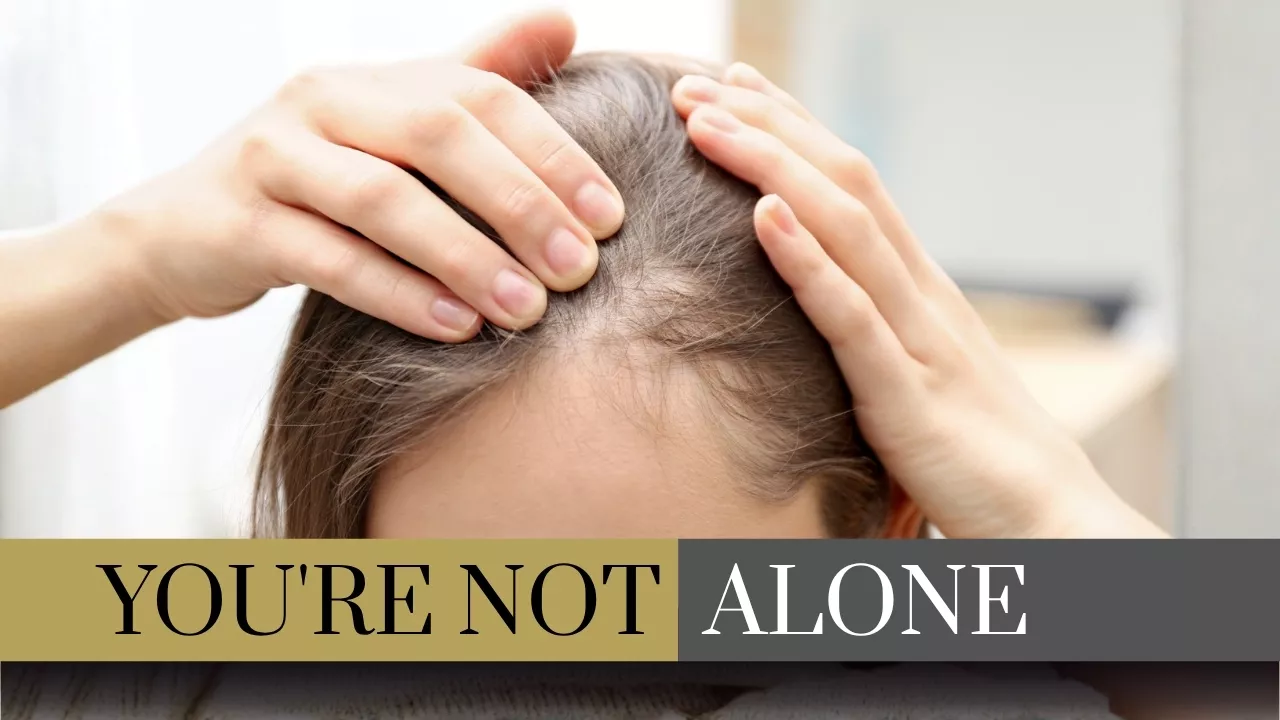
Hair thinning is far more common in women than most realize, yet almost no one talks about it. Learn why it happens and the options that actually help.
Most people picture a man when they think about hair loss. Here’s what most people don’t expect: hair loss is far more common in women than most people realize. They just don’t talk about it nearly as often.
So let’s have the conversation out loud. Maybe your ponytail feels thinner than it used to. Maybe your part looks a little wider, or you’re seeing more scalp when your hair is wet, or noticing extra strands every time you wash. If any of that sounds familiar, you’re far from the only one, and you don’t have to simply live with it.
Hair thinning in women can happen for a lot of reasons. Hormonal changes, stress, genetics, nutritional deficiencies, postpartum shifts, illness, and the natural aging process can all affect how dense your hair is and how it grows. It’s rarely one single thing, which is part of why it can be so confusing to sort out on your own.
There’s also a number worth sitting with. A 2025 Hers study found that nearly 23% of women say their hair has gotten thinner, which is actually higher than the 18% reported by men. This isn’t a rare problem. It just gets talked about far less, which leaves a lot of women feeling like they’re the only one.
“Thinning happens so slowly that years can pass before you notice, which is why catching it early matters”
The biggest misconception is that hair loss shows up suddenly and obviously. In reality, thinning usually happens gradually, slowly enough that months or even years can pass before you realize how much density you’ve lost. That’s exactly why paying attention early matters so much. The sooner you notice the pattern, the more room you have to do something about it.
Awareness has grown, and so have the options. Treatments like microneedling with PRP use your body’s own growth factors to support and stimulate the scalp. Some patients explore targeted scalp treatments that deliver nourishing ingredients directly where they’re needed. And because healthy hair truly starts from within, nutrition, hormone balance, stress management, and the right supplements all play a role too. Every person’s situation is different, which is why a personalized conversation with a provider always matters more than a one-size-fits-all approach.
Here’s what we really want you to take away. Hair thinning is nothing to feel embarrassed about. It doesn’t mean something is terribly wrong, and it isn’t something you simply have to accept. The earlier you start paying attention and asking questions, the more options you’ll have in front of you.
If you’d like to talk through what’s happening with your hair and explore what’s right for you, we’re here to help. Call us at (210) 446-6263, email us at updates@samedspa.com, or visit samedspa.com. Our providers are here to listen, educate, and help you feel like yourself again.